
IT compliance is a key issue for small and medium-sized enterprises (SMEs). But what does ‘IT compliance’ actually mean, why is it important, and how can SMEs implement it effectively? In this article, you will learn everything you need to know about this topic.
IT compliance refers to adherence to legal, regulatory and internal requirements in the field of information technology. This includes data protection regulations, IT security policies and industry-specific regulations governing the handling of digital information and data.
Why is IT compliance important for SMEs?
Many SMEs underestimate the importance of IT compliance and thereby expose themselves to significant risks. Here are some of the main reasons why IT compliance is crucial:
- Legal certainty: Businesses must comply with regulations such as the GDPR or the IT Security Act to avoid penalties and legal consequences.
- Protection of sensitive data: Protecting customer and company data is essential to prevent cyberattacks and data loss.
- Trust and reputation: Good IT compliance strengthens the trust of customers and business partners and secures the company’s market position in the long term.
- Increased efficiency: Clear IT policies and structured processes improve efficiency within the company.
Industries and their specific compliance measures
The GDPR applies to all companies that process personal data of EU citizens, regardless of their size or industry, and therefore affects virtually all companies.
Compliance measures from the GDPR: Implementation of data protection guidelines, data protection impact assessments, obtaining consent, ensuring the right to data access and deletion.
In addition, there are other different requirements for IT compliance depending on the industry. We have compiled an overview of some industries and the relevant requirements in our white paper:
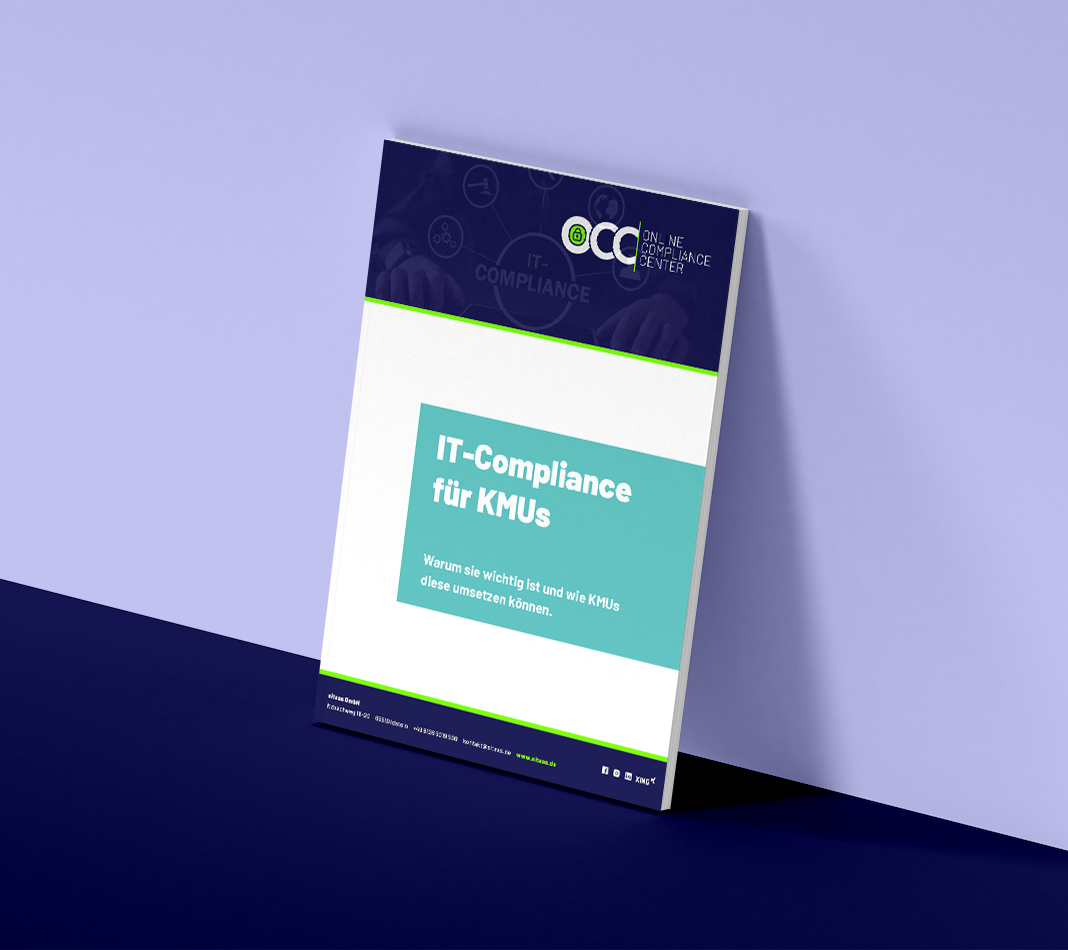
White paper on industry requirements
We have compiled an overview of some industries and the relevant requirements in our white paper.
Get the downloadHow do SMEs implement IT compliance?
The implementation of IT compliance requires a systematic approach. Here are some steps that SMEs should consider:
Analysis of legal requirements
Companies should familiarise themselves with the applicable laws and regulations and check which ones are relevant to them.
Risk assessment and security strategy
An analysis of IT risks helps to identify security gaps and develop a suitable protection strategy.
Data protection guidelines and IT security measures
The introduction of clear data protection guidelines and security measures (e.g. encryption, access controls) is essential.
Regular review and adjustment
IT compliance is a continuous process. Regular audits and adjustments to new regulations are necessary.
Implement technology and processes
Use the necessary technological solutions and processes to meet compliance requirements. This may include data encryption, the use of firewalls or regular review of access rights.
Employee training
Employees should receive regular training in IT security and data protection to minimise risks.
IT compliance is essential for SMEs to meet legal requirements, protect sensitive data and remain successful in the long term
With a structured approach, companies can overcome the challenges of IT compliance while improving their IT security. Different industries have specific requirements, which is why individual solutions are necessary to minimise compliance risks.